
Tiles commonly used for walls come in various materials, each suited for different environments and aesthetic preferences. Here are the main types of tiles typically used for wall applications:
1. Ceramic Tiles
- Description: Made from clay and fired at high temperatures. They often have a glaze applied to their surface.
- Advantages: Durable, easy to clean, available in various colors and patterns, and relatively affordable.
- Applications: Ideal for kitchen backsplashes, bathrooms, and general wall coverings.
2. Porcelain Tiles
- Description: A type of ceramic tile made from finer clay and fired at higher temperatures. Denser and more durable than standard ceramic tiles.
- Advantages: Highly durable, water-resistant, stain-resistant, and available in many designs.
- Applications: Suitable for bathrooms, showers, and high-traffic areas. Can also be used for exterior walls.
3. Glass Tiles
- Description: Made from glass, these tiles come in a wide variety of colors, finishes, and sizes.
- Advantages: Reflective, adding brightness and a sense of space. Resistant to stains and moisture.
- Applications: Perfect for kitchen backsplashes, shower walls, and decorative accents.
4. Stone Tiles
- Types: Includes marble, granite, travertine, slate, and limestone.
- Advantages: Natural beauty, unique patterns, and long-lasting.
- Applications: Used for feature walls, bathrooms, and fireplaces. Requires sealing to prevent staining and water damage.
5. Mosaic Tiles
- Description: Small tiles made from ceramic, porcelain, glass, or stone, often arranged in intricate patterns.
- Advantages: Versatile in design, great for creating detailed and decorative patterns.
- Applications: Backsplashes, shower floors, accent walls, and borders.
6. Metal Tiles
- Description: Made from materials like stainless steel, aluminum, or copper.
- Advantages: Modern look, durable, heat-resistant.
- Applications: Kitchen backsplashes, feature walls, and industrial-style interiors.
7. Peel and Stick Tiles
- Description: Self-adhesive tiles, often made from vinyl or other lightweight materials.
- Advantages: Easy to install, no need for grout or mortar, temporary, and cost-effective.
- Applications: Rental properties, DIY projects, and quick renovations.
8. Subway Tiles
- Description: A type of ceramic tile, typically 3×6 inches, named after the tiles used in New York City subway stations.
- Advantages: Classic, timeless look, easy to clean, versatile.
- Applications: Kitchens, bathrooms, and utility rooms.
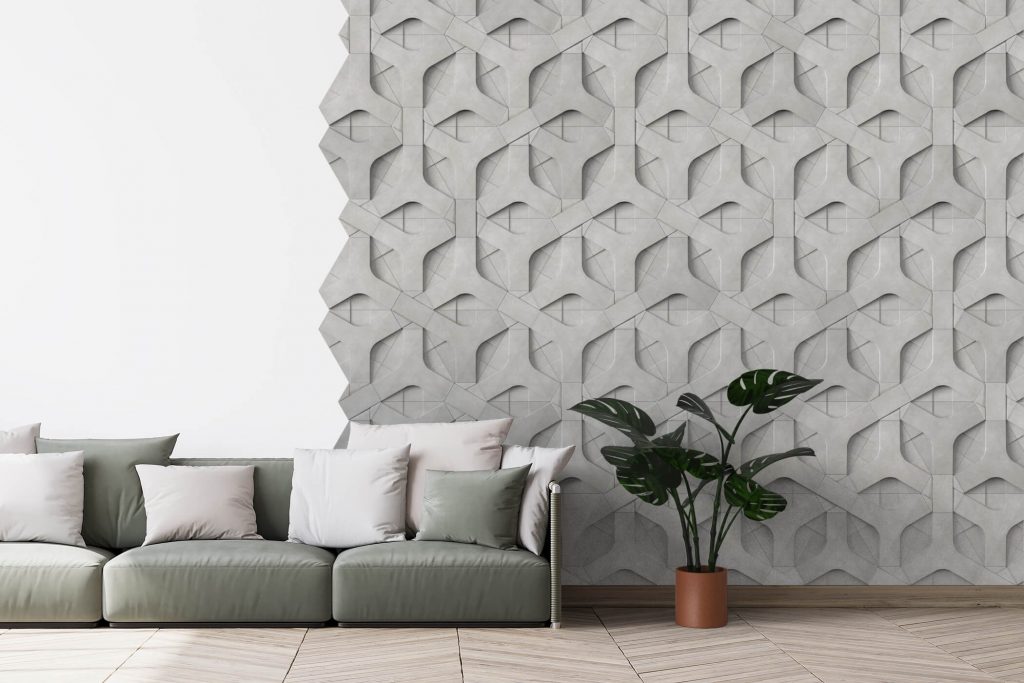
9. 3D Tiles
- Description: Tiles with three-dimensional patterns or textures.
- Advantages: Adds depth and interest to walls, available in various materials.
- Applications: Feature walls, accent walls, and modern interiors.
10. Concrete Tiles
- Description: Concrete tiles, composed of cement, sand, and aggregates, are customizable in shape, size, texture, and color.
- Advantages: They are durable, versatile, low-maintenance, cost-effective, and eco-friendly.
- Applications: Suitable for interior and exterior walls, including feature walls, bathrooms, kitchens, building facades, and garden walls.
Choosing the Right Tile for Your Wall
- Location: Consider the room where the tiles will be installed. For example, bathrooms and kitchens require moisture-resistant tiles.
- Style: Match the tile type and design with your overall interior decor.
- Budget: Material and installation costs can vary widely.
- Maintenance: Consider how easy the tiles are to clean and maintain.
Each type of tile offers unique benefits, so selecting the right one depends on your specific needs and the desired look for your space.