
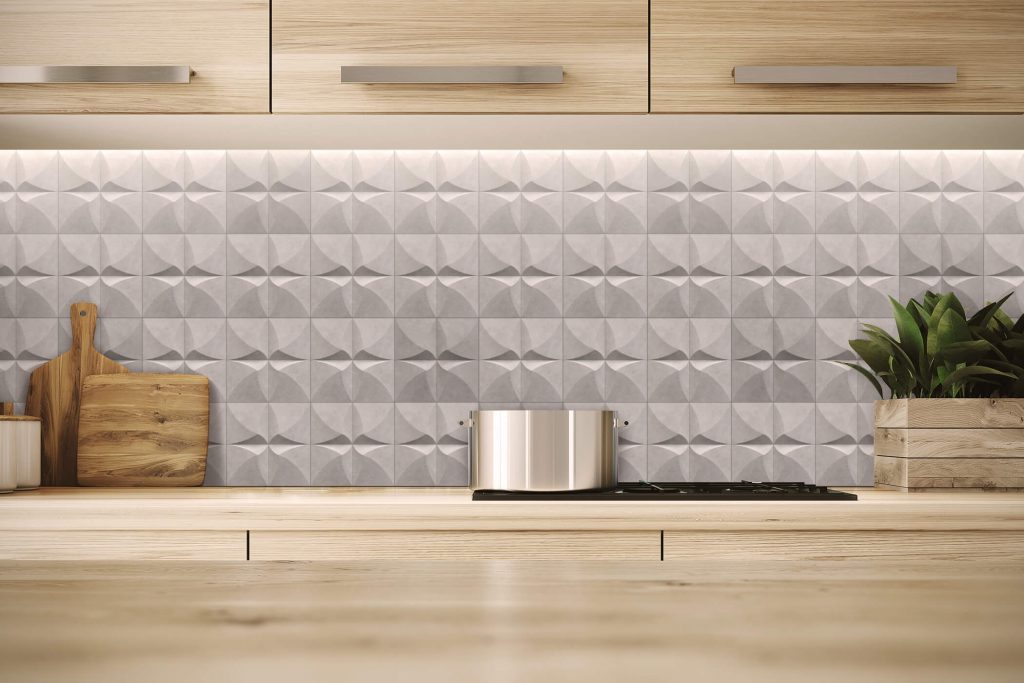
Concrete tiles are another excellent option for wall applications, offering a unique combination of durability, versatility, and aesthetic appeal. Here’s an overview of concrete tiles and their typical uses on walls:
Description
Concrete tiles are made from a mixture of cement, sand, water, and often additional aggregates or pigments to achieve various colors and textures. They can be cast into different shapes and sizes, providing a wide range of design possibilities.
Advantages
- Durability: Concrete tiles are highly durable and can withstand wear and tear, making them suitable for both interior and exterior applications.
- Versatility: Available in a variety of textures, colors, and patterns, concrete tiles can mimic the appearance of natural stone, wood, or other materials.
- Customization: Easily customizable to fit specific design needs, including bespoke shapes and sizes.
- Thermal Mass: Concrete has excellent thermal mass properties, helping to regulate temperature by absorbing, storing, and releasing heat.
- Low Maintenance: Once sealed, concrete tiles are relatively easy to clean and maintain.
Applications
- Interior Walls
- Feature Walls: Concrete tiles can create striking feature walls in living rooms, bedrooms, and commercial spaces, adding texture and a modern industrial feel.
- Bathrooms: Suitable for bathroom walls due to their durability and resistance to moisture (when properly sealed).
- Kitchens: Often used for kitchen backsplashes, providing a unique and robust surface that stands up to heat and spills.
- Exterior Walls
- Façades: Used for exterior cladding, providing a contemporary look and additional insulation properties.
- Garden Walls: Ideal for outdoor features and landscaping projects.
Design Options
- Textured Tiles: Can have various textures, such as smooth, rough, or patterned, to add depth and visual interest.
- Stamped or Stenciled: Patterns can be stamped or stenciled into the tiles for decorative effects.
- Colored Concrete: Pigments can be added to the concrete mix to produce tiles in a wide range of colors.
- Polished or Matte: Available in different finishes, including polished for a sleek look or matte for a more rustic appearance.
Installation and Maintenance
- Installation: Concrete tiles are generally heavier than other types of tiles, requiring a strong substrate and professional installation to ensure they are securely fixed.
- Sealing: To protect against stains, moisture, and wear, concrete tiles should be sealed after installation and resealed periodically.
- Cleaning: Regular cleaning with mild soap and water is usually sufficient. Avoid harsh chemicals that can damage the sealant.
Conclusion
Concrete tiles offer a robust, versatile, and aesthetically pleasing option for wall applications, both indoors and outdoors. Their ability to be customized and their range of design options make them suitable for various architectural styles, from modern industrial to rustic. Proper installation and maintenance are key to ensuring their longevity and performance.